Affichage des articles dont le libellé est gaming. Afficher tous les articles

vendredi 19 février 2021

Game Design analysis: Why Fire Emblem Three House's Garreg Mach Monastery is plain salad


The Garreg Mach Monastery was one of the most notable additions to Fire Emblem: Three Houses, asides from Claude being upside down on the box art. Jesting aside, I do remember many people being very excited about this addition, likening it to a more in-depth version of the My Castle from Fates. Personally, I feel it is more akin to an explorable version of the base castles from Genealogy of the Holy War, where you could shop, enter the arena, and do various things before your characters could leave for battle. Of course, there are many differences between the two, but the gist of the inspirations seems there.


In theory, exploring a base camp, talking to your units, forging bonds with them, and engaging in a multitude of activities is appealing, but over time, you end up realizing that you spend a lot of time in the monastery, and very little time is actually doing what was otherwise the focus of the game: tactical RPG combat. It is like being served a meal where the sides would be more prevalent than the main dish. As the game progresses, you gain more and more resources to use at the monastery, and the time you spend there increases, exponentially. It’s like they keep adding more and more salad on your steak platter. You try to eat all of the sides, but it quickly gets you full, and it spoils the main dish for you. Salad in end of itself isn’t the issue; it’s that there is just too darn much of it. If you watch let’s plays of Three Houses, entire episodes are spent just preparing for the next chapter, and not actually making any progress, story-wise. And as the let’s play progresses, their episodes can go over the hour mark just to get past that specific point of the game. You get to fish, eat with your allies, go to a sauna, feed dogs and cats, cook, forge, watch longwinded supports, play where’s Waldo with blue shiny spots, get tutelage, change learning focuses for weapon ranks, do some gardening, sing at a choir, give gifts to allies, give them terrible life advice at an advice box, etc…


Having options is great, and I generally advocate for them. However, when one option yields overwhelmingly better results than the alternative, it really becomes an illusion of choice. Yes, you could choose to skip most of the monastery phases, but you would lose out on valuable weapons, items, support points, weapon experience, student motivation, passive buffs, stat boosters, divine pulse charges, quests, side missions, forging, the actual ability to forge, battalions, various shops, gold, and more. The entire game was made with the assumption that you would use this feature extensively. While one could potentially get by a very challenging hard mode without it. Maddening makes it almost a requirement. It “is” possible to beat it with minimal monastery use, but it requires very creative shenanigans. In a sense, the point of a tactical game is “tactics”. You should generally be expected to try to make the best of the situations presented to you. Few will play optimally, but most will make a conscious effort to try to win, even when using meme builds. With the monastery system, however, it is a tedious affair, and foregoing it is tantamount to kneecapping yourself.


The tedium leaves players with a conundrum. On one hand, it is optimal to explore at Garreg Mach and get as much as you can from it. In the other hand, one might just want to move on to the next map much quicker. Now, how do we fix this?


In essence, most of what is possible at the monastery can actually easily be conducted through a mere menu interaction. Moving the cursor in a split-second to select a character / shops, is essentially replaced by running around for minutes. Collecting random objects is now a Where is Waldo minigame, and fishing could literally just be removed and just give you’re the items instead. I do believe that that is some value in exploring an area, but there could definitely be an option to simply auto-collect all of the lost items at Garreg Mach, and manage the various monastery-specific activities through a few menu presses. The Tellius games had a base camp system that exemplifies how this could work.


The thing is, I actually enjoy parts of Three Houses. It is a game that feels good to play. The menu is snappy, the quality of life changes give you more information than ever before, and while the objectives are not very varied in the main game, there are very solid side missions that do. Despite all of these positives, every fiber of my being recoils at the idea of going back to this game. The monastery prevents me from going back to a game that I legitimately enjoy. I would in fact be more likely to play the DLC, as it dials down on the exploration aspect. And while some may point out to games like Persona as being very much the same in that regard, there is one distinct difference; for Persona, the relationship building and immersing yourself in the world is its entire point. Its style of game is better suited for it. A tactical RPG fan is less likely to be looking for this kind of element in their games.


This may have seemed like a scathing view on Three Houses, but I did enjoy this game far more than I did Awakening and Fates for instances. It is less a criticism of the whole game itself, but rather of a specific aspect of the game that prevents the player from delving into some of what are arguably some of its better aspects. It is a pacing issue. I wish that the game allowed me to experience it on my own terms. 


mercredi 29 juillet 2020

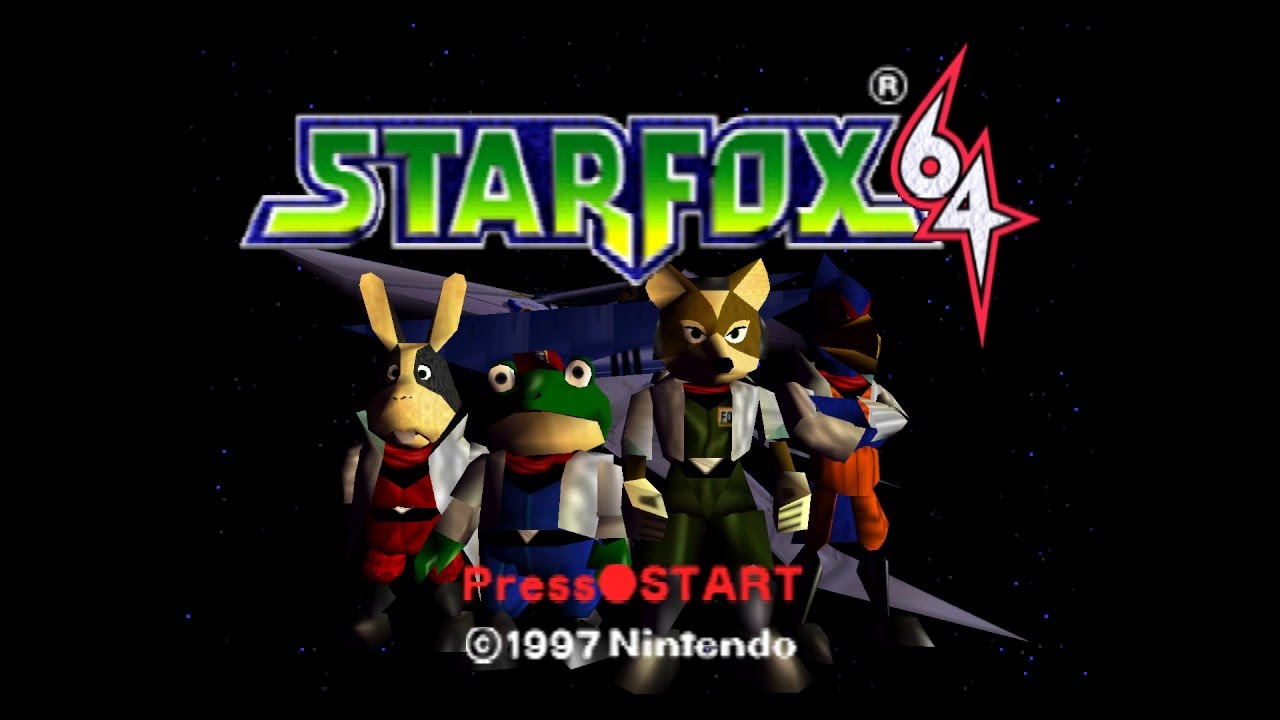
Falco Lombardi, a narrative entangled with gameplay.


Star Fox 64 is a simple arcade style shooter with a simple, story. However, it is told in a very effective and endearing manner, which is why it is so memorable to this day. Ultimately, it is the story of the son of a renowned war hero who must now take over his mantle, but unlike his father who came before him, he just does not have the same pedigree. Fox McCloud is a skilled pilot, but he has never really made a name for himself, and he has much to prove.


On his motley crew of pilots, you have Slippy Toad, a genius engineer who is a serviceable pilot, but not exactly the most skilled, Peppy Hare, who is a wise veteran who fought alongside the heroic James McCloud, and Falco Lombardi, a hot-headed ace pilot who values skill above all else.


Falco’s personality naturally clashes with Fox’s position, which he would feel is unjustified. Fox is still green, lacking in experience, and Falco starts the game feeling as if he is working under someone who has not yet earned his respect. As such, he is especially critical of Fox, the player, whenever he fails to accomplish an objective, and it takes a lot for him to even acknowledge your accomplishments.


Everything comes down to one thing: He values skill intrinsically. He lacks patience for blunders, but it is not as if his philosophy only applies to you. You can tell that he feels shameful whenever you must bail him out of a precarious situation. He teases Slippy, but you can also see that he does show appreciation for his technical skills in terms of engineering. You can also see that he is far harsher with you than he is with Slippy. This very likely stems from your position as a leader. Again, you have not earned his respect; and this is why he sometimes does not exactly listen to you.


As you play through the different routes, you may notice that if you keep failing objectives and going on the easy route, Falco will be a lot harsher on you, and upon reaching the end of the game, he will have gained some respect for you, but he will not have completely accepted you as his leader. If you keep beating objectives, and take the harder route, Falco will start working with you more, he’ll show you secret areas, back you up, and you’ll even see a character from his past show up to help; showing a softer side of him. Upon completing the game, his respect for you will have been completely earned as he exclaims “That’s our leader!”.


From a gameplay perspective, it is a very good way to give feedback to the player in a believable way. If a character highly values skill, it makes sense that they will react differently to you depending on how much skill you show off. It can be shown off in multiple ways, such as beating a boss or enemies quickly enough to prevent an ally being taken out, hitting switches to derail a train, stopping an onslaught of missiles racing towards your mothership, or just flying under a few arches just for style points. Falco rewards you for playing well, and bluntly tells you when you messed up.


Some players have gotten the character entirely wrong and instantly took to disliking him for his harsh rhetoric. They assumed that the character was just being mean to the player just to be mean, and without valid reasons. Yet, this could not be farther from the truth. If anything, you are the leader, and you hold their lives into your hands. A single mistake can cost them their lives, and Falco is acutely aware of this. He will not give you a free pass because you’re daddy’s little boy. Where you’re coming from doesn’t matter; what matters is that you work hard to keep your crew alive. It is a very pragmatic way of seeing the world, but it is not inherently a cruel one. If you stand there complaining that he’s berating you after you have failed to meet his expectations, you are just the kind of person that Falco cannot stand; a person who makes excuses for his shortcomings. If you rise above that, start to understand where he is coming from, and aim to improve, and actually do; he will respect you.


For a game with such a simple story, it is surprising how believable its characters feel. With only a few one liners here and there, you can get a very in-depth understanding of how they view the world, and the fact that it affects gameplay is an astonishing realization. Star Fox 64 has always been one of my most beloved games of all time, and one I love revisiting from time to time.


mercredi 22 mai 2013

X-Box One: A turning point in video game bigotry.


Upon the reveal of the X Box One, Microsoft has announced a new policy on lending games that will no doubt have a nefarious effect on the gaming industry if we let it slide... and that is destroying the used game market AND rental business.

That’s right, once you buy a game and put it in your X Box One, it will require you to install it on your system. Once it is installed, it is locked to that system and any attempt to run the game on another system will demand a fee to let it run.

Think about the impact of such a measure. That means that if you own an X-Box One game and say... your roommate wants to play the game in his room on his own X-Box One, he will get a “give us money” message from Microsoft. If you decide to sell your game after you’ve gotten tired of it, the unfortunate person who will buy it will pay an extra fee to gain the right to use it on his system.

In both Canada and the US, that would be a direct affront to the first-sale doctrine (also sometimes referred to as right of first sale, first sale rule or exhaustion rule). Its role is to limit certain rights of a copyright or trademark owner to avoid abuses. It allows for such acts as library lending, selling legally purchased products you own to a second party, gift-giving, and video/game rentals. The X-Box One fiasco basically feels like they have studied books of law in detail to find the one loophole that could go around this law without getting in trouble themselves.

Take this situation as an example: Say you wish to rent a game to figure out whether it fits your fancy or not, not only will you pay the rental cost, but also pay the extra fee imposed on you by Microsoft. This is the kind of practice that will most likely kill the rental business, make people lose their jobs, and antagonize honest, law-abiding citizens by treating them like pirates for engaging in an act that is completely within their legal rights.

Now take this sillier scenario... You bring your game to you friend's place to play it with him. He would have to pay for it. That's right, he would have to shell out money to play a game you own while you are there with him.

Mind you, people could basically lend their X-Box Live account to a friend as well. Then they would be able to access the game and all would be honky-dory. The problem is that by acting in such a manner, you are basically going against their terms of service. In the eyes of Microsoft, you are a pirate; an outlaw. You risk getting your account suspended if you get caught. Big brother reached the console market, my friends.

Microsoft may not be the most innovative gaming company, but the fact remains that it is currently one of the leaders of the gaming industry, and if we let them get away with it, others will follow. Gamers must speak with their wallets; they must refrain from buying a system that will drive the industry in the wrong direction. I am generally not one who cares what other gamers buy, and I let them make their own decisions without being too judgmental about it. However, for the first time, I would like to formally ask for your cooperation against this looming threat and not give your money to Microsoft. Every dollar we will give to this system is a vote for their nefarious, bigoted, and antagonizing philosophy. If you don’t want your legal right to first sale to be taken away from you, then make Microsoft understand it, and most importantly, let it be known that this is the reason why they are losing money. The X-Box brand will not die from one failure, and other companies (Nintendo and Sony) will observe the phenomenon and hopefully not make the same choice. Gamers DO have power. Their money is a vote of confidence; it is telling a company that you approve enough of their product to invest in it. If they lose a lot of money, then they WILL try to win you back. They WILL go back on their bad decisions.

Before I end this editorial, I would like you to look at these opinions:


EGMnow article

As you can see, I am not the only one who feels that way. Your rights are only as good as your ability to defend them. As a community, we have the ability. Let us use it.

vendredi 23 décembre 2011