vendredi 7 août 2020

The case for an open-air Star Fox game.


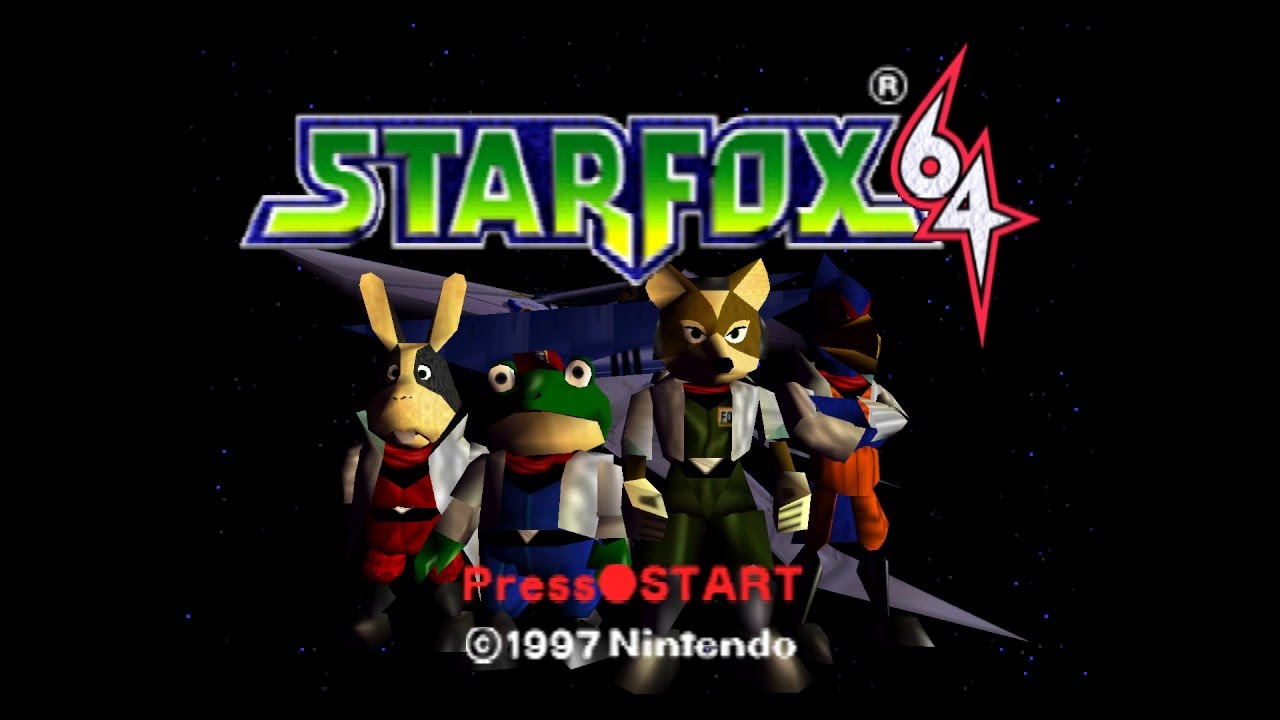
One of my fondest memories about the Nintendo 64 was the first game I got for it: Star Fox 64. The charm of the lovable cast, the great ambient music, the tight controls… everything about this small, but dense package was appealing to me. It was a series that I did not know anything about, and when I went back to try the original SNES game, and then ventured onto Star Fox 2, I was surprised at how forward thinking this series used to be. With the newer entries, I was starting to feel that the series was losing its identity; as if they wanted to innovate for the sake of innovation at the detriment of the game’s inherent quality. I initially felt very confident in Platinum game’s ability to make a good Star Fox experience, as the secret Star Fox easter egg in Bayonetta 2 was the most fun I have had in a Star Fox style arcade shooter since Star Fox 64. Nevertheless, Star Fox Zero may have had the assistance of Platinum Games, but with Shigueru Miyamoto at its helm, certain decisions were made to try and legitimize the use of the Wii U Gamepad. This made the game nigh unplayable for all, even if some did state that they had no issues at all, whilst footage of their gameplay showed them clumsily crashing into buildings.
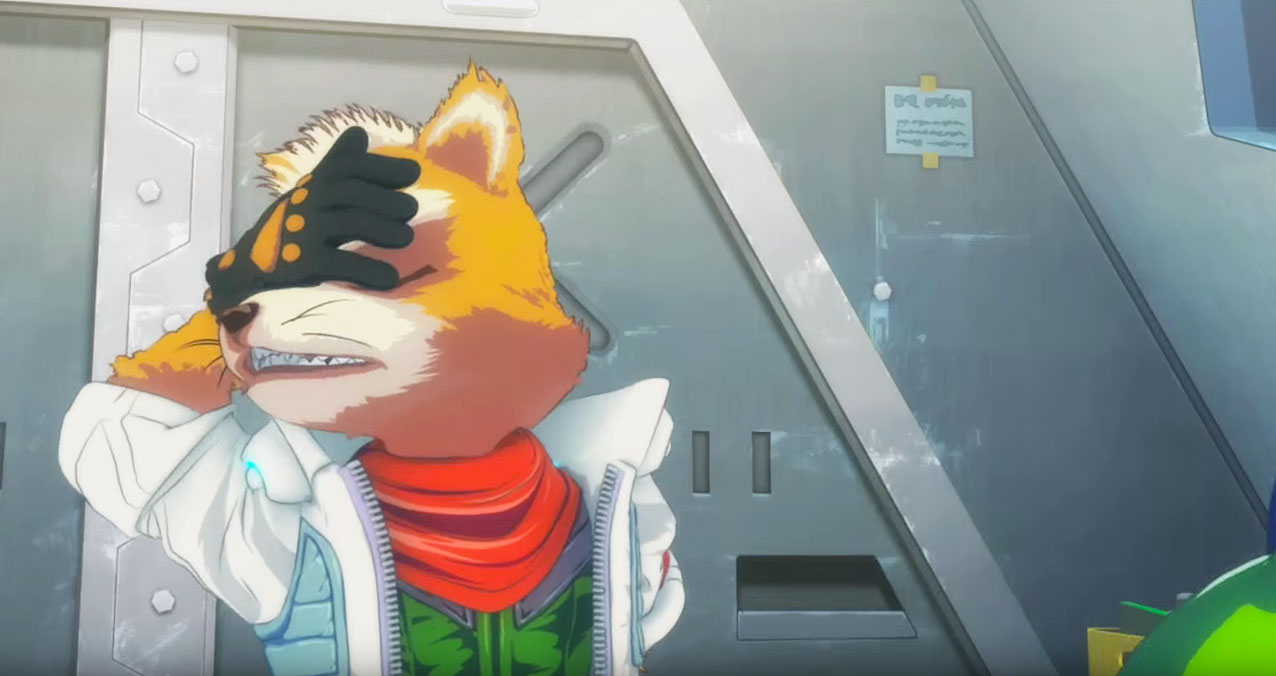


The average response to Star Fox Zero


Still, after having fully played through Star Fox 2’s more open progression system, I have been thinking about how someone could rejuvenate the franchise in an important manner. The first thing that came to mind was to think about what people love about the series. The characters are one of them, but we seldom ever see them outside of missions. We do not get to see how they interact with people when they aren’t locked in intergalactic ship combat. Yet, I see all of these creative-looking planets, but we don’t exactly get to explore them at all. We don’t know all that much about their culture, politics, or just… day to day lives.


I am proposing an open-air style Star Fox game that blends the classic arcade gameplay into an explorative experience. Imagine a classic scenario where all of the Lylat system was taken over and Corneria remains as the last bastion of resistance against the attack. You begin the game pushing away an invading force, and the Cornerian army hires you as a strike force to attack from behind enemy lines as the bulk of the Cornerian army fights to defend their ground. You are literally sent to liberate planets because they just can’t spare the troops to do anything other than that.


As you start flying to different planets, you might stumble upon military checkpoints, bases, secrets, creatures, raiders, etc… As you perform various side missions, you can get paid for your work, and spend said credits on upgrades. These would be “different” as opposed to better. For example, maybe you can replace you default laser with a weaker, but rapid-fire kind of laser, or perhaps you could replace your charged shot with a weaker one that targets multiple enemies at once. Perhaps your charged shot could take a little longer to charge, but have a wider area of effect, or maybe you could invest in a quicker boost that doesn’t have quite as much charge. This would be an interesting way of encouraging exploration without making it mandatory.


As you reach an actual level, you shift into a more traditional on rails mode, and play as a classic Star Fox experience. As you begin to liberate there areas, the Cornerian army will gain some ground, and their influence will grow. These zones will become a little safer, and you will then be able to visit some of these planet’s cities and bases to go grab quests, upgrades, and interact with a colourful cast of characters. Quests could as wide as reconnaissance, battles, or assisting characters like Katt, Bill, or new faces in missions. You could even spend time in the Great Fox or in hub cities to get to know your crew a little better. in other words, progression is marked by the front-line moving farther into enemy lines. 


Star Fox in Starlink


The idea is to simulate a war where you make a difference through your direct actions. This is essentially a more… up to date interpretation of Star Fox 2’s gameplay, at a grander scale. Of course, Star Fox lives and dies by its gameplay, and this is why the transition to a rail shooter type of gameplay during regular missions is necessary. It is the bread and butter of the series for a reason; nothing beats a fully tailored on rails experience done well if you want full-fledged cinematic action.
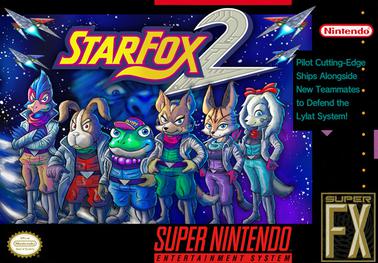
 

A piece of history revisited thanks to the SNES Classic


Of course, I am aware that this level of risk might not be something Nintendo would like to take on. As a series, Star Fox is not exactly the highest-grossing. Still, it is fun to imagine what could be. After all, passion is a beautiful thing.

vendredi 31 juillet 2020

How the path to making people play your games starts with ease of use.

When we harken back to the days of classic video game consoles, one thing that always struck me is how quick it was to just boot up a game and actually play it. That is primarily because gaming consoles were just gaming consoles. There was not multimedia, no online component, and the technology was just not as complex. For the longest time, I would say that I did not necessarily care about the box that played my games, as long as the games themselves were good. Yet, I was proven wrong on many occasions.


I used to be a Nintendo only kind of person, and so, I first experienced what it was like to play games on the Playstation 1 and Playstation 2 during the Wii/PS3/360 era. I went back to play many of the RPGS that these consoles had to offer, and enjoyed quite a few of them, but I was always bothered by one aspect of these systems: Loading times.


Smoking is indeed bad for you.


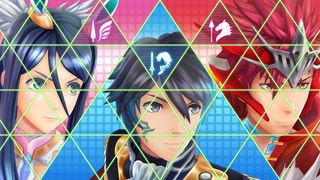
There are many times, while I was visiting the vast catalogues of these consoles, where I would stand in front of loading screens long enough for me to grab myself a glass of water and come back, or worse. I vividly remember playing Tales of the Abyss, and thoroughly enjoying the game, but dreading going through doors. It may sound like a silly nitpick, but when every action that leads to loading times leaves you enough time to start getting bored, it grates over time in an 80 hours game. Yet, when this game was re-released on 3DS with significantly shorter load times, I have found myself appreciating it far more. I felt the same when I tried Tokyo Mirage Sessions on Switch as opposed to Wii U. It really helps move things along when the battle transition screen takes a lot less time.


This screen stays on noticably longer on Wii U during battle transitions


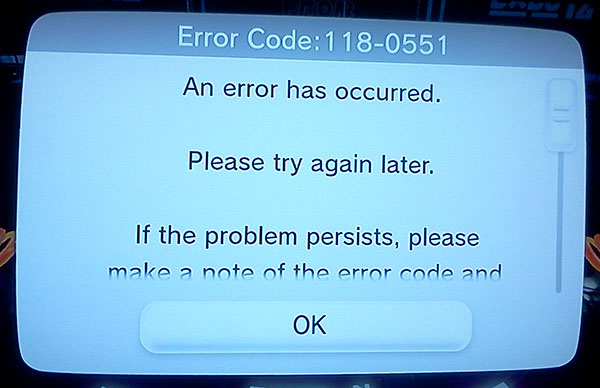
Speaking of the Wii U, this console represents one of the worse examples of poor ease of use. The first issue begins with just booting the console. It takes a very long time to boot the system, boot your game, and actually start playing. Furthermore, a lot of the menu navigation, prompts, and even some games require the use of the large, cumbersome Wii U gamepad. If you are not keen on using the pad and prefer using a Pro controller, you need to keep it next to you while playing games on the off chance that a notification pops up and the console’s UI won’t let you click “Ok” using the pro controller. What makes matters worse is that the gamepad has a very poor battery life and must be plugged into an outlet at nearly all times. If notifications, or the need arises to go into the menu to change basic functionality, and your Gamepad does not have a charge, you must wait a few minutes until it has enough charge to be used to continue. Since the battery tends to drain when not in use, the gamepad will often end up completely drained when you need to use it. Because of this, I am often hesitant to even want to boot up this system, as I just can’t be bothered to deal with the hassle of setting it up. Comparatively, I look at the Switch, which is loads quickly to the menu, and I can start playing almost right away. Furthermore, I have invested in multiple docks, so I can just set it up on every single screen on my living space right away without dealing with cables. It is seamless, and it feels great to take my Switch from the living room, bring it to my bedroom, and continue my game while in bed. As such, I am often drawn to want to use my Switch as my primary system, just because of how painless the setup is. Of course, the console is not the only factor.


You can only press "Ok" using a Gamepad. You can't even press A to dismiss it on a Pro controller.


While this is more of a personal taste, I have never been very fond of the Wii Remote, which has made me hesitant to even want to boot my console. One can get around that by plugging a classic controller to it, but it still requires a set of double A batteries, and I generally would rather be able to control the menu with a Gamecube controller since I only use my Wii to play Project M nowadays. The idea that you need to have one set of two controllers out just to start a game, then switch to another controller after the game starts up, is pretty silly if you think about it. Hackers have fixed this issue with a custom firmware that allows you to just use a Gamecube controller, and that alleviates many of the issues that come with booting up a Wii, but the fact that we needed hackers to fix the issue is a problem in end of itself. 


Sometimes, ease of use issues happen even without a console. Phantasy Star Online 2 is a game that I have been asked to play by a friend. Wanting to spend some time with him, I decided to go download it on the Windows Store… only to realize that it just would not boot up no matter what I did, and uninstalling it corrupted a partition in my hard drive. The inadequacy of the Windows Store was so evident that it has been review-bombed not because of its inherent quality, but because of how the store prevents people from playing it. With the announcement of a Steam release, people will finally be able to play it (hopefully), and the game might be given a second chance to perform well in North America.


Source: PCGamer.com


Steam itself is great proof that ease of use has quite a bit of power. The store tends to make it far easier to access games on a PC, to a point where many people who would have otherwise resorted to piracy now actually buy their PC games. People are willing to pay for convenience. As much as I tend to try to buy most of my games physical for games preservation purposes, I can see why people choose digital libraries.


I’ve been surprised with how many examples I could find where I was looking at my console or PC and said “Nah, I’ll just play on this instead”. I feel like this pertains to many things in life. When I lived with my parents, they had a fridge with a water dispenser, and because of how easy and instantaneous getting a glass of water was, I would stay hydrated more consistently. Now that I need to boil water before drinking it, it adds a pretty long step to the process, and I often resort to drinking other things instead. Henceforth, when I move into a new home, I will install a fridge with a water dispenser, as it will lead me to better life habits. In other words, the first step to making people want to engage in an activity is to remove as many obstacles as possible leading to it.

jeudi 30 juillet 2020

Mega Evolutions VS Dyna/Gigantamaxing

Pokemon is a franchise that has been known to not rock the boat too much and stick to what they know. The franchise has evolved over time, and things were added to try and spice up the formula, but very often, these innovations feel more… tacked-on and easily-disposable.


One such addition was Mega Evolutions, in which you could use a Mega Stone to temporarily evolve Pokemon beyond their final stage, akin to a Digivolution in Digimon. In essence, it was a power boost to one pokemon in a given battle. Mega Evolution was very powerful, with the only downsides being that it was only usable on one Pokemon per battle, and it used up an item slot.


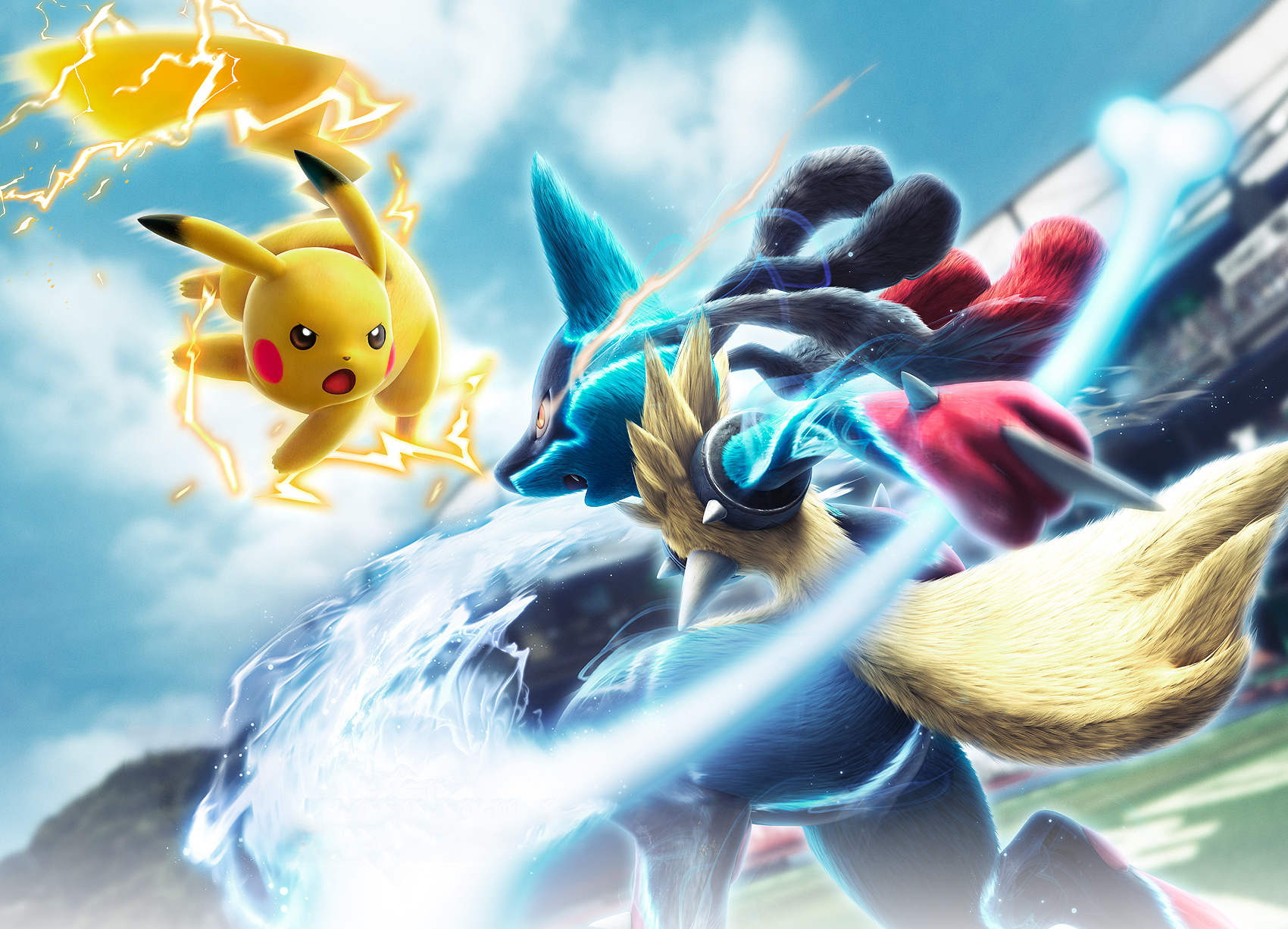
There was some strategic process behind Mega Evolutions as it would normally not be advisable to put a Mega Stone on every Pokemon in your party, since only one of them could Mega Evolve in a given battle. That Pokemon could only equip that specific item, and so you would strategically build your team around getting them other kinds of items. Your Pokemon would also get a given boost in stats, and could even have a change in type. For example, one of Charizard’s Mega Evolutions actually gave him a dragon type. Furthermore, skills could be changed, such as giving Adaptability to Mega Lucario, which made him do 2X damage with Steel and Fighting type moves, as opposed to 1.5X. It would turn him into a powerhouse, albeit he’d lose his immunity to flinching for example. Kangaskhan could even get a second hit from the baby in its pocket for example, helping to to take down Pokemon with the Sturdy ability, or the Focus Sash item. The implications of using Mega Evolutions led to more than just a stat boost; it led to game-changing elements that could admittedly make battle interesting. The disadvantage is that not all Pokemon have Mega forms, and this can lead to some Pokemon being overly used in tournament settings.


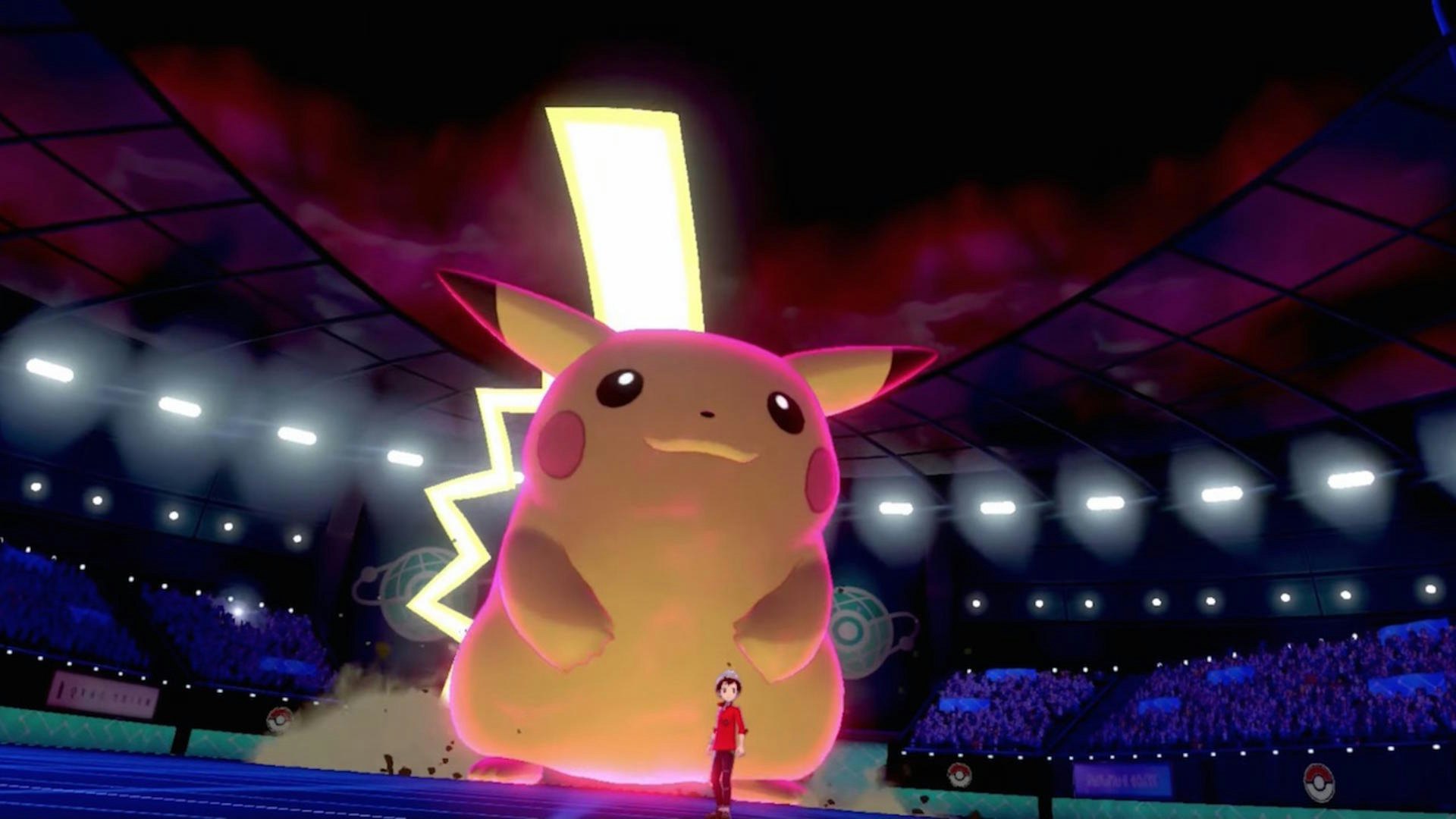
On the other hand, Dynamaxing has the ability to be used on every single Pokemon. No matter the Pokémon, it can Dynamax. There is also Gigantamax, which does bring Mega Evolution-like appearance changes that can make these Pokemon look almost as unique. It also only lasts three turns, which means that there is some strategy in when you actually choose to Dyna/Gigantamax your Pokemon, as opposed to Mega Evolutions lasting the entire fight. However, it is also a much more simplified version of the Mega Evolution idea, where instead of still having your general moveset, it gets replaced by a generic “Max-Something”, which does the same thing, no matter which move you use, with only the power changing a little. It boosts your power, makes you hit hard, more tanky and not much else. It is essentially just a stat injection for three turns. Yes, some have slight special effects, but again, most of the time, these are generic. In my opinion, it’s just not as entertaining to use.


Still, this is not to say that there isn’t good in both. Personally, I would bring back Mega Evolutions, but limit them to three turns per battle as Dyna/Gigantamaxing does. I would also allow every Pokemon to “get stronger” with Mega energy by equipping a stone not tailored to them (E.G. a Pinsirite on a Mr. Mime for example), in which they would gain stat bonuses, a surrounding glow, but remain in the same form. That would open up options, letting people use their favourites as front-runners even if they lack a Mega Form. I would then add Mega forms over time, letting more and more Pokemon Mega-Evolve, giving better bonuses to Pokemon that are a bit more… underwhelming.


By combining the two concepts, we could create a system that has some level of complexity as well as giving players more control over which Pokemon they wish to use. The ability to have multiple Mega stones for one Pokemon means that you could technically have two mega evolutions for different tactics, for example.


In my opinion, those added gimmicks are pointless to invest in if they just do not become a long-term staple. In my opinion, Mega Evolution could be used for far more than just being a cool transformation gimmick. It could be a tactical power boost that leads to fun upsets, not unlike what meters are used for in fighting games. It can also be used as a means to balance out the roster a little more. Perhaps a Mega Evolution could take a weak Pokemon like Dunsparce and actually turn it into a legitimate threat. You could even use Mega Stones as a way to learn new moves on given Pokemon to give them some nice buffs if they need it. If a Pokemon is already very strong, the benefits of Mega Evolving could simply be less potent. Clearly, I prefer Mega Evolutions over Dynamaxing. However, it doesn’t mean that you can’t improve on a given option by looking at the alternative for inspiration.


Ideally, I would like to see Gamefreak stick to a design decision and to perhaps not introduce new gameplay elements only to remove them one or two games later. It’s okay to sometimes polish over innovating. I would like to see Mega Evolutions taken to the next level and see what they can do with it.


mercredi 29 juillet 2020

Falco Lombardi, a narrative entangled with gameplay.


Star Fox 64 is a simple arcade style shooter with a simple, story. However, it is told in a very effective and endearing manner, which is why it is so memorable to this day. Ultimately, it is the story of the son of a renowned war hero who must now take over his mantle, but unlike his father who came before him, he just does not have the same pedigree. Fox McCloud is a skilled pilot, but he has never really made a name for himself, and he has much to prove.


On his motley crew of pilots, you have Slippy Toad, a genius engineer who is a serviceable pilot, but not exactly the most skilled, Peppy Hare, who is a wise veteran who fought alongside the heroic James McCloud, and Falco Lombardi, a hot-headed ace pilot who values skill above all else.


Falco’s personality naturally clashes with Fox’s position, which he would feel is unjustified. Fox is still green, lacking in experience, and Falco starts the game feeling as if he is working under someone who has not yet earned his respect. As such, he is especially critical of Fox, the player, whenever he fails to accomplish an objective, and it takes a lot for him to even acknowledge your accomplishments.


Everything comes down to one thing: He values skill intrinsically. He lacks patience for blunders, but it is not as if his philosophy only applies to you. You can tell that he feels shameful whenever you must bail him out of a precarious situation. He teases Slippy, but you can also see that he does show appreciation for his technical skills in terms of engineering. You can also see that he is far harsher with you than he is with Slippy. This very likely stems from your position as a leader. Again, you have not earned his respect; and this is why he sometimes does not exactly listen to you.


As you play through the different routes, you may notice that if you keep failing objectives and going on the easy route, Falco will be a lot harsher on you, and upon reaching the end of the game, he will have gained some respect for you, but he will not have completely accepted you as his leader. If you keep beating objectives, and take the harder route, Falco will start working with you more, he’ll show you secret areas, back you up, and you’ll even see a character from his past show up to help; showing a softer side of him. Upon completing the game, his respect for you will have been completely earned as he exclaims “That’s our leader!”.


From a gameplay perspective, it is a very good way to give feedback to the player in a believable way. If a character highly values skill, it makes sense that they will react differently to you depending on how much skill you show off. It can be shown off in multiple ways, such as beating a boss or enemies quickly enough to prevent an ally being taken out, hitting switches to derail a train, stopping an onslaught of missiles racing towards your mothership, or just flying under a few arches just for style points. Falco rewards you for playing well, and bluntly tells you when you messed up.


Some players have gotten the character entirely wrong and instantly took to disliking him for his harsh rhetoric. They assumed that the character was just being mean to the player just to be mean, and without valid reasons. Yet, this could not be farther from the truth. If anything, you are the leader, and you hold their lives into your hands. A single mistake can cost them their lives, and Falco is acutely aware of this. He will not give you a free pass because you’re daddy’s little boy. Where you’re coming from doesn’t matter; what matters is that you work hard to keep your crew alive. It is a very pragmatic way of seeing the world, but it is not inherently a cruel one. If you stand there complaining that he’s berating you after you have failed to meet his expectations, you are just the kind of person that Falco cannot stand; a person who makes excuses for his shortcomings. If you rise above that, start to understand where he is coming from, and aim to improve, and actually do; he will respect you.


For a game with such a simple story, it is surprising how believable its characters feel. With only a few one liners here and there, you can get a very in-depth understanding of how they view the world, and the fact that it affects gameplay is an astonishing realization. Star Fox 64 has always been one of my most beloved games of all time, and one I love revisiting from time to time.


vendredi 13 mars 2020

Improving Hyrule Warrior’s giant bosses.


Koei Tecmo’s Warriors series nowadays is mostly a tactical beat them up game with simple controls that allow players to defeat hordes of enemies in order to take on a battlefield’s objectives. The tactical aspect differs from game to game, but it generally entails taking down specific enemies, and capturing or defending select locations. Even then, this is a very reductionist take because there is far more to these games. The default normal mode being far too easy and being easily brute-forced tends to be the reason that the average consumer often sees this series as “brainless”. On harder difficulties, enemy generals can dish out serious damage if you do not dodge, and they are far more aggressive, for example.


The series started off with notable Chinese historical figures as playable characters (Dynasty Warriors), but an offshoot was created from it featuring notable historical figures of the Japanese unification wars (Samurai Warriors). Then multiple offshoot were made to capitalize on various franchises like Gundam, Persona 5, Fire Emblem, and of course, The Legend of Zelda.


In these offshoots, Omega Force tries to include elements from the franchise they are basing the game on. For Zelda, they tried use multiple aspects, including using the right item to break a boss’ guard. That includes throwing a bomb into King Dodongo’s gullet, or shooting at Gohma’s eye with an arrow. Those boss battles feel very “Zelda”, but I believe that they are inherently flawed in their execution.


The issue comes with how said bosses move. In Zelda games, bosses tend to telegraph their attacks, and as such, you can use the right item for the situation and beat the boss. The boss in end of itself is a puzzle to solve. The issue with Hyrule Warriors is that they try to replicate that wait and react approach to combat, but there is no real pace to the battle. In Ocarina of time, King Dodongo has a fixed set of behaviours. He’d roll around, and then when he is done, he’d prepare for a fire-breathing attack. In Hyrule Warriors, there is no set pattern. The boss will use a move randomly from a pool of attacks in its moveset. As such, since you almost do no damage when not exploiting their weakness, if you are caught in a situation where you get unlucky RNG, you could be stuck waiting for a very long time for the enemy to show their weak spot. While rare, I have been in situation where I had to run circles around the enemy for over five minutes in the Wii U version. The 3DS and Switch versions thankfully add a system where you get more magic meter if multiple playable allies congregate around the boss. You can use the magic meter to force a weakened state, and that circumvents some of the issue. However, what happens if you have only one playable character for that scenario? And even with this set in place, it still takes a considerable amount of time to build up.


In terms of pacing, having to run circles around an enemy that simply refuses to do the right action heavily slows down progress. It also does not help that it adds a random element that can actually impede your progress. High score rewards are locked behind getting a good time, the RNG can have a significant effect on whether you get an A rank or a B Rank.


The first thing I would consider revising is attack patterns. I see no problems with a randomized set of attacks, but when it comes to the attack necessary to take these bosses down, I would implement a timer, which would force these bosses to use those said attacks after a set amount of time elapsed since the last time it was used. By doing this, you are reducing the amount of time spent running around the enemy waiting for the right opportunity.


You could also revise how much damage bosses take when the weakness is not taken advantage of. You technically do damage to bosses that are not in a prone state, but the amount of damage is extremely small, which makes a full combo barely even show any difference on their health bar. It could be possible to slightly increase the amount of damage that normal attacks have on a boss while still making guard breaks the optimal way to cause damage. This would make it so that actually attacking between guard break opportunities to cause some nice chip damage is not a waste of time. In a small way, this would keep the player engaged in the action. Mind you, I appreciate why they made the choices that they did, and they actually made improvements to their systems in the re-releases. The prime example I would list is the Imprisoned boss battle. In the original, the imprisoned would stop taking damage beyond half HP. In other words, no matter how much damage you would do, the Imprisoned would stop taking damage beyond the half HP threshold and start chasing you down. It would only begin taking damage again at the end of the chase. By removing that limitation in the remaster, it makes taking the Imprisoned down far less tedious.


All in all, Hyrule Warriors is a fantastic game with massive amounts of good content. It treats the game series with incredible reverence, and the passion shows. It is unfortunate that Omega Force does not always show that level of commitment to some of their other projects, like with Fire Emblem Warriors. Nevertheless, I would love to see a sequel with revised boss mechanics that can be more reliably taken-down. Challenge is welcome, but it also should not be a game of chance and grueling wait. This criticism comes from a place of love, as someone who played hundred of hours of this game.

vendredi 28 février 2020

The case for fixed level ups in Fire Emblem


The case for fixed level ups in Fire Emblem


When you are evaluating the viability of a unit in Fire Emblem, there are many factors you must consider: How long they are available, their weapon ranks, their class, etc… However, if we were to oversimplify things, we could just talk about base stats and stat growths.


Base stats are the stats that a characters starts with. They are important to determine the immediate usefulness of a character. A character with very high base stats will be useful right away. If their base stats are high considering their level, it actually helps their long-term viability as well. If you get a level 10 character with nearly maxed strength and speed, it does not matter if they do not level these stats often; they are already viable. These units tend to be reliable, and some players would argue that choosing reliable units is the way to go, as they are less tedious to make use of. They would argue that a character with low base stats could technically become good but at the cost of a lot of investment put into them, and it is not necessarily always going to work out in your favour.


Base growth determines a character’s chance of getting an increase in one of their stats. A 70% strength growth means that most of the time, they would be likely to gain more strength, but that is a 70% RNG roll every single level up. That means that it would be technically possible to roll very poorly on some runs, and great in others. High growth units that have many levels to go have a lot of potential, but potential does not always lead to results. I have seen playthroughs of Path of Radiance where Ike, a unit that tends to have a very high strength growth, where Ike had gotten only 4 strength level ups during the entire game. It is very unlikely, but it can happen.


                                                               Showing the variance:


This amount of variance has many implications, game design-wise. On one hand, it means that every playthrough will be different. Perhaps some characters will be very RNG-blessed and simply carry your run on one playthrough, while in another run, your MVP might be completely different. It leads to a lot of variety, where every playthrough is different than the last. However, this also means that in terms of game-balance, the developers must consider the RNG as a factor when designing maps.


Imagine that you make a boss with very high defense that only your main character can defeat. However, your character just didn’t level strength enough, and just does 0 damage to said boss. You are now locked in a no-win situation where you just cannot continue your run, no-matter what. The game has to be designed around multiple scenarios, where they must consider all sorts of results. This is why they tend to give very powerful units and tools to the player at various points in the games, in order to allow the player to progress in the worst possible circumstances. In FE 7, you get Marcus to help newbies, and Isadora joins much later to help in the case you might have lost Marcus. Then Athos is given to you on the last chapter in case you have nothing to defeat the final boss with.


However, in a game where you have less room for random variance, you can create far more intentional map-design. In Shadows of Valentia, the DLC maps were centered on a selected few units that had fixed levels and equipment. It led me to more effectively trade weapons and items between characters in clutch moments, or using a character’s abilities to their fullest. In the Cindered Shadows DLC for Three Houses, having more limited room to grow let them make maps taking advantage of the abilities of the set characters. While you could level up, the amount of levels you could obtain between the start and end of the DLC and the start of the main story to its end-game was much lower. This led to some creative map ideas that the main game could not have pulled off. In some cases, the damage my characters would do would be flush with the enemy’s HP on hard mode. Because the game knew you have to have a flier, one map made use of that fact by putting forests in front of your objective.


The fact is that with a fixed-level-up system, the developers would have a far better idea as to what the average stats of a player’s characters on a given map would be, and they could balance levels around that, adding a bit of a puzzle element to the maps.


Now, I am not saying that this is what they should do, but I very much enjoy those smaller Fire Emblem experiences that make stat variations less of a factor. I am aware that this has become a staple of Fire Emblem, but if anyone were to make a Fire Emblem-type game with a different spin, it may be an option to consider.

Rune Factory; a different kind of time waster.

Games like Animal Crossing or Harvest Moon have always been games that a subset of gamers can really get into, and their popularity has increased with the influx of more female gamers. Yet I often see a lot of people, me included, who just can’t get into these game, no matter how open they keep their minds. It may be because some people enjoy a more communal and relaxing playstylw, as opposed to some needing clearer goals and direction.


In a sense, I like feeling like I am progressing, building up to something, but those two games do not have a definite ending. You can’t « beat » Animal Crossing or Harvest Moon. You jus tplay until you are bored of it. I have many games to play and too little time, so the prospect of getting lost for years on one game doesn’t appeal to me. Yet, I enjoy Rune Factory, an offshoot of Harvest Moon, and I’ve always wondered why. I think I came up with an answer.


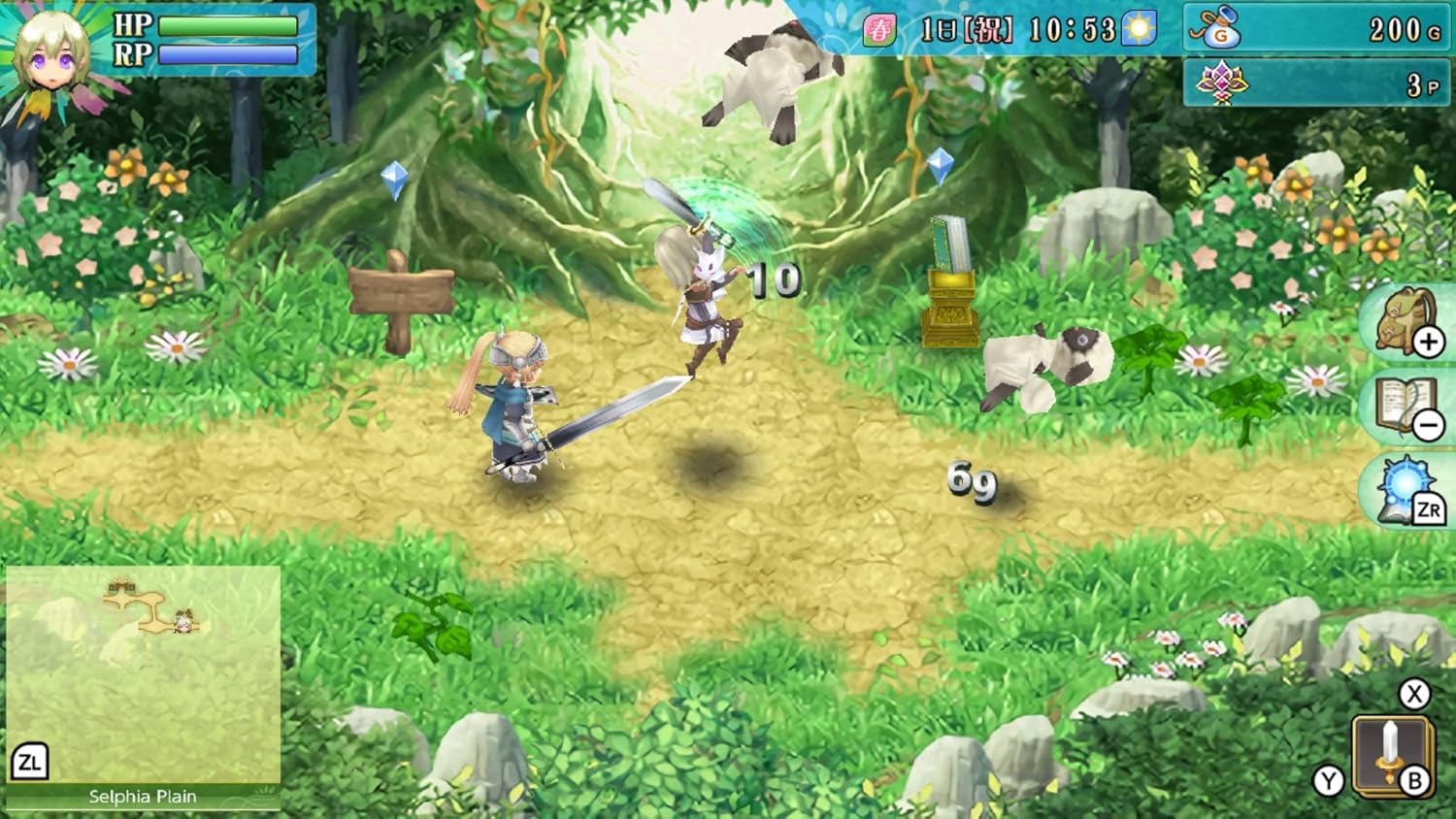
Rune Factory lets you manage your own farm, foster relationships, and just relax, but it also has a few differences to consider. Rune Factory has an actual story, combat, and dungeon-crawling. It allows the player to break the monotony of farming with exploration, and an unfolding narrative. It is hardly the deepest narrative, but it is something to work towards, and the life sim aspect becomes something you can use to immerse yourself in the world between story beats.  There is an end goal, and a definitive ending. While you can play past the main story, it gives you a good stopping point if you require it.


Rune Factory brought someone like me in, and it is in large parts because of the combat. It didn’t need to be great, just serviceable enough to break the monotony. If combines the farming with dungeon crawling by allowing the player to farm little plots of land in dungeons in order to get more energy to carry on further. Since your character can get tired, it is important to manage their stamina, albeit, they will use less and less stamina the more they engage in certain things. It is possible to brute-force the game through fighting a lot and then using little to no stamina in battle.


The game accomodates people who want goals to strive towards, and it isn’t that I think that Harvest Moon or Animal Crossing are bad games, but Rune Factory has achieved a happy medium between the two types of gamers that I find very interesting. This si why I prefer Dragon Quest Builders to Minecraft for instances.


Rune Factory is a franchise that deserves more attention, and after nearly dying once due to the closure of Neverland, I am happy to see it back (now can I have Lufia again?)